English| EUR
Suggested for you
More currencies
Choose a language
Two cities, roughly 130 kilometres apart, separated by the Dinaric Alps and joined by one of the most photographed rail corridors in the Balkans. Most travellers weigh three options: the Sarajevo–Mostar train, the intercity bus, or a car of their own. This guide sets out what each involves and how the timings fit together.
Quick answer
The train and the bus both depart from the combined station at Put života 2, open 06:00–17:00 every day of the week, with no entry fee to use the terminal. Trains follow the Neretva canyon and are the scenic choice; buses run more frequently and reach the Old Bridge quarter directly. Counter opening times can shift on public holidays.
The railway between Sarajevo and Mostar climbs to a summit near Ivan Sedlo, then loses more than 700 metres of altitude in a single descent — a gradient steep enough that the original Austro-Hungarian line needed a rack-and-pinion section to hold the carriages back. Today's electrified route replaced that engineering with tunnels and spiral curves, but the drama survives. Passengers who ask how to get from Sarajevo to Mostar are usually asking two questions at once: which mode is fastest, and which one is worth looking out the window for. Those answers diverge. The bus network is denser, leaves more often, and drops passengers within walking distance of the Neretva's east bank and the Stari Most. The train runs a shorter timetable but threads the Neretva canyon at close quarters, past Konjic, the emerald reservoir at Jablanica, and a succession of tunnels that open onto sheer limestone. Drivers take the M17 through the same valley, with the freedom to stop at Blagaj's Dervish house or the Kravice waterfalls on the return — a detour no scheduled service offers. Private transfers and organised Mostar day tours occupy a middle ground, bundling those stops into a fixed itinerary. Geography explains why nothing here is quick. The two cities sit in different watersheds; the road and rail corridors both funnel through the Neretva gorge because there is no easier line through the karst. That constraint keeps journey times broadly similar across modes, which shifts the decision away from speed and toward comfort, luggage, flexibility and cost. A traveller carrying bags to a Mostar guesthouse weighs this differently from one making a return trip in a single day. Season matters too. Summer sees heavier demand on the Sarajevo–Mostar route, and the ticket counter at Put života 2 keeps to a 06:00–17:00 pattern that suits early departures rather than late ones. Anyone planning a Herzegovina day trip should build the return leg into the plan before booking the outbound. The sections below break down the station approach, the daily schedule, the best window to travel, and the booking steps in sequence. Read as a whole, this how to get from sarajevo to mostar guide is less about a single correct route than about matching the corridor to the kind of day intended — a photographic descent through the canyon, or the fastest possible arrival at the Old Town.
“The road and rail corridors both funnel through the Neretva gorge because there is no easier line through the karst.”
The journey from Sarajevo to Mostar connects Bosnia and Herzegovina's capital with the historic center of Herzegovina, most commonly via the scenic rail line or the E73 highway. The train is widely considered the primary method for this trip due to its direct route and accessibility.
ŽFBH line from Sarajevo Station to Mostar
Main Bus Station (Autobuska stanica) via E73
E73/M17 highway southward
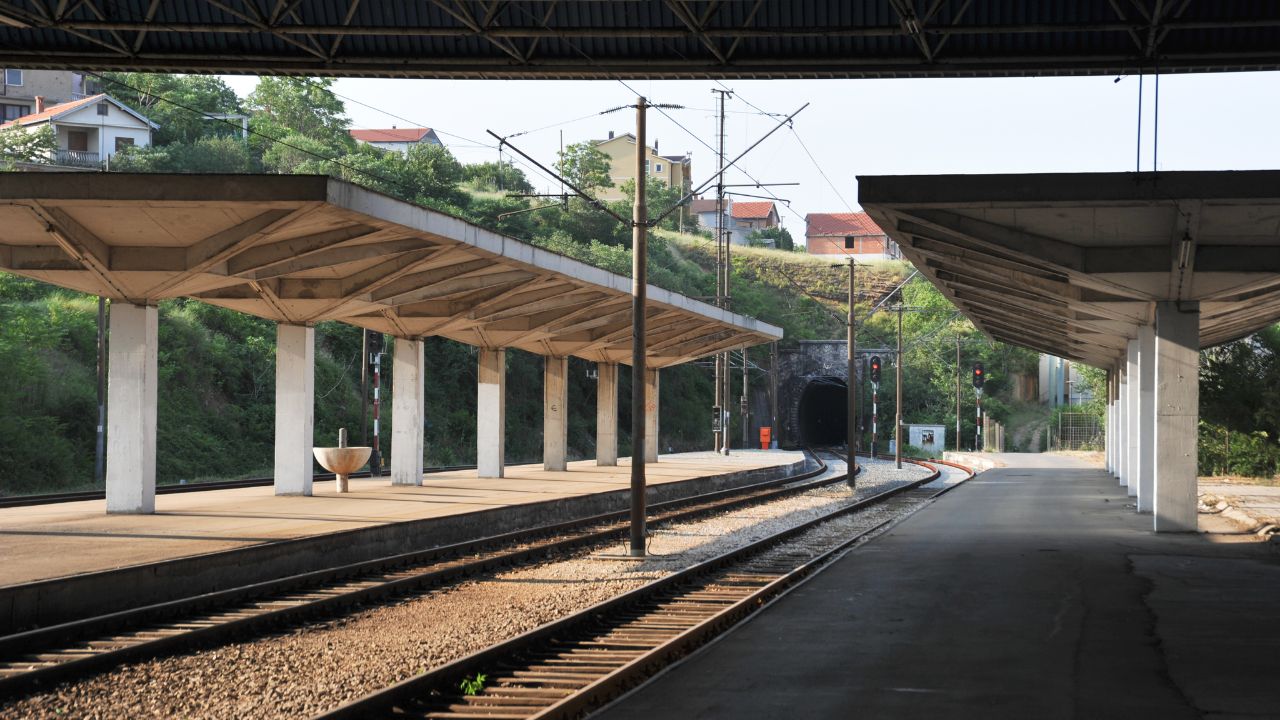
For train travel, head to the station at Put života 2, 71000 Sarajevo. Arrive within the best arrival window of 06:30–07:00 to purchase tickets at the counter and secure your seat for the morning departure.
The transit hub located at Put života 2 operates daily to facilitate travel planning for those journeying to Mostar. The facility maintains consistent hours throughout the week.
The most effective way to travel from Sarajevo to Mostar is during the early morning hours, which allows for consistent seat availability and efficient station navigation. Arriving during the designated best arrival window of 06:30–07:00 ensures you can purchase tickets at the counter before the morning departure.
Mild, 15°C to 22°C
The landscape is green and temperatures are comfortable for travel.
Hot, 25°C to 35°C
Expect higher demand for seats during these peak months.
Cool, 12°C to 20°C
This period offers stable weather conditions and thinner crowds.
—
Visiting Tuesday through Thursday provides the calmest station experience for securing your preferred departure.
Verdict: Plan your trip for a Tuesday, Wednesday, or Thursday during the months of April or October, arriving at the station between 06:30 and 07:00.
This procedure takes you from walking into the station at Put života 2 through to being seated on the Mostar service, with the journey itself running roughly two to two and a half hours. Allow around 30 minutes on the ground before departure for the ticket counter and platform.
Head to Put života 2, 71000 Sarajevo, where the bus and rail terminals sit side by side. The two buildings share a forecourt, and travellers regularly queue at the wrong counter, so check which service you want before joining a line.
Purchase your Mostar ticket in person at the ticket window inside the terminal. Entry to the station itself is free at 0 BAM, so anyone directing you to pay to enter the concourse is not staff.
Check the departure board and ask the clerk which platform or bay your service leaves from. Platform assignments for Mostar services change between departures, so the number printed on an older ticket or listed online is not reliable.
Large bags go in the hold for bus services and are usually charged separately by the driver, in cash. Keep passports, tickets and valuables in your hand luggage rather than the hold.
Show your ticket to the driver or conductor and take your seat. For the scenic Neretva canyon stretch, the right-hand side gives the better view heading south.
Mostar has more than one stopping point depending on the service. Tell the driver you are going into the centre and confirm which stop is closest to the Old Bridge before the vehicle pulls away.
Timetables shift with the season and with track works. Confirm current departures by phone on +387 33 655 330 or via the official site at https://www.zfbh.ba, and see this site's booking pages for available services.
Follow these practical guidelines to ensure a smooth transition when traveling from Sarajevo to Mostar.
Train stations and local vendors often require cash in BAM for ticket purchases and onboard refreshments. Keep smaller denominations available to simplify transactions at the station counter at Put života 2.
Have your passport or government-issued photo identification ready when purchasing tickets and boarding. Authorities may perform random checks during transit to verify traveler credentials.
The journey takes several hours, and onboard options can be limited. Bring bottled water and snacks to remain comfortable throughout the trip.
Train carriages may become crowded during peak travel seasons. Aim to secure your seat early to ensure you can choose a window position for optimal views of the Neretva River.
Ensure your identification documents are current and undamaged. Officials require clear, valid proof of identity to process your travel properly.
Everything you need to know about how to get from sarajevo to mostar
The most scenic and reliable way to learn how to get from sarajevo to mostar is by taking the passenger train through the mountains. This rail connection offers comfortable seating and views of the Neretva River valley throughout the journey. Rail travel remains the preferred option for many visitors traveling within Bosnia and Herzegovina. The national railway operator provides regular service connecting these two historic cities. Please visit their official website to view the latest departure schedules and plan your logistics accordingly. You should arrive at the station between 06:30 and 07:00 to purchase tickets at the counter and ensure a seat for your departure. This early window is essential during the busy summer season to avoid sold-out morning services. There is no entrance fee as this facility is a public transport hub rather than a paid tourist attraction. Please check the official operator website for current updates on services and operational notices. Passengers generally find the train journey efficient and relaxing compared to other transit methods. Families with children often find the spacious train carriages more comfortable for navigating the route than a bus or private car.